On this page
What this guide covers
Zepbound (tirzepatide) comes two ways: a single-dose prefilled pen you press against the skin, and a single-dose vial you draw up with a syringe. Here is how each one works, where to inject, how to rotate sites, and the small snags nobody warns you about. This is patient education, not a substitute for the prescriber who knows your case. Generic names sit next to brand names throughout: semaglutide (Ozempic, Wegovy), tirzepatide (Mounjaro, Zepbound).
Key points
- Zepbound comes two ways: a single-dose pen and a single-dose vial. The first thing worth knowing is that Zepbound (tirzepatide) is not one device but two, and which one you have changes the steps. Most people are dispensed the single-dose, prefilled pen: one pen holds one week's dose, you use it once, and you discard it, with nothing to dial because the dose is fixed inside. Zepbound is also sold as a single-dose vial that you draw up into a separate syringe yourself, a form the manufacturer introduced mainly for the lower starting strengths. Both deliver the same tirzepatide, the same molecule sold as Mounjaro, and both go under the skin once a week; they simply differ in handling. Because titration steps come as a new pen or vial of a different strength rather than a number you turn, the rest of this page treats the pen and the vial separately so you can follow whichever you were given.
- The three injection sites: belly, thigh, upper arm. Zepbound is a subcutaneous injection, meaning it goes into the layer of fat just under the skin, not into muscle or a vein. The FDA Instructions for Use name three regions: the abdomen, the front of the thigh, and the upper arm. On the belly, stay at least two inches (about five centimeters) clear of the navel. On the thigh, use the fleshy front-outer part rather than the inner thigh or over the kneecap. The upper arm absorbs the drug just as well but is the hardest spot to reach yourself, so many people save it for when someone can help. All three regions work equally, so the choice comes down to comfort and reach. What you should not do is inject into skin that is tender, bruised, red, or hard, and if you take other injected medicines, Zepbound should not be mixed in the same spot as another drug at the same time.
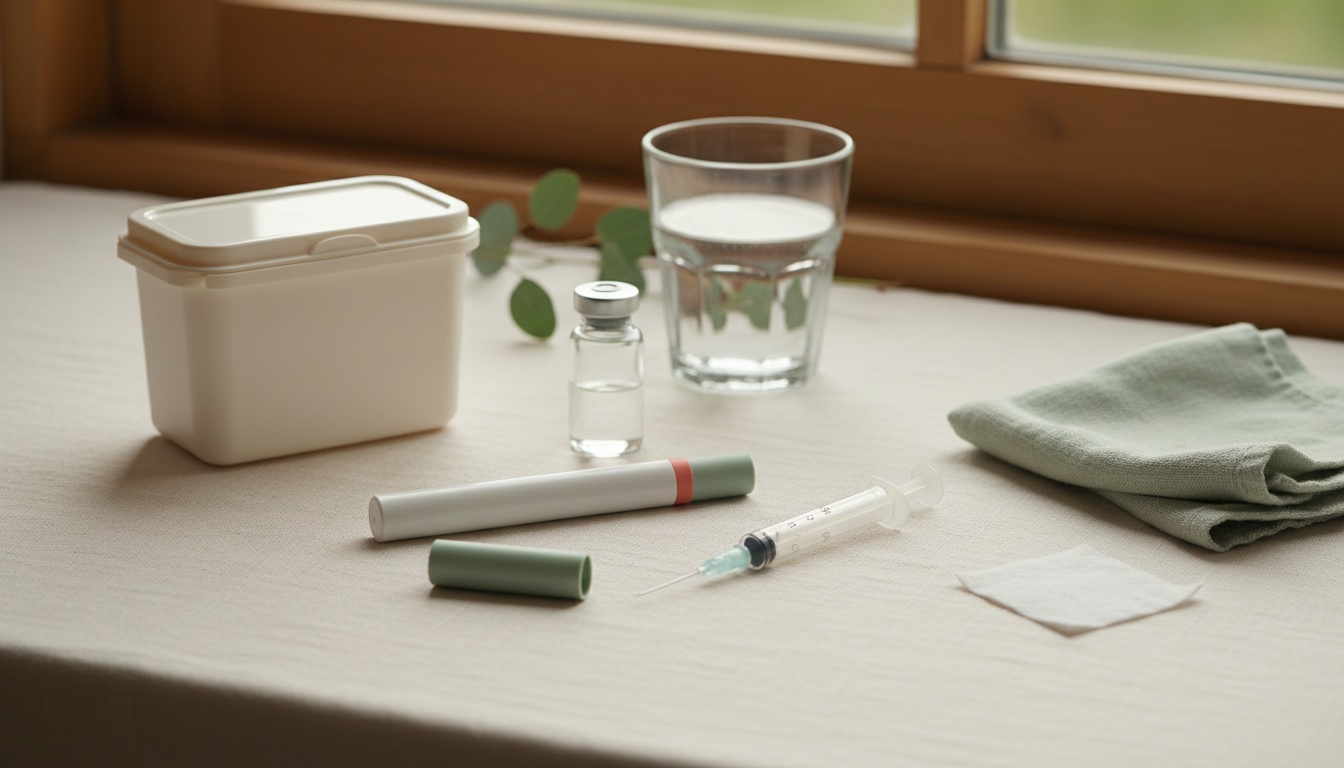
- Working the single-dose pen, step by step. The pen is more forgiving than it looks. Take it from the fridge and look at the medicine through the window: it should be clear and colorless, and a cold pen can sit out briefly if a chilly injection stings. Wash your hands, then pull the base cap straight off only when you are ready, never before, and do not touch or push the needle end. Place the flat, uncapped end firmly against your chosen spot so it sits flush at a right angle to the skin, then press and hold the injection button. You will hear a first click when the dose starts and a second click when it finishes; keep the pen pressed to the skin through both clicks, usually for the count of several seconds the leaflet gives, until the medicine window is filled and the plunger has stopped, which is how you know the whole dose has gone in. Lift the pen straight off and drop the entire pen into a sharps container, never loose in the household bin.
- Working the vial and syringe, if that is what you were given. The vial takes a few more steps but is well within reach when done calmly. You will have a single-dose vial and a separate syringe of the type your pharmacist supplied. Wash your hands, wipe the vial's rubber top with an alcohol swab, and let it dry. Draw air into the syringe to the mark that matches your prescribed dose, push it into the vial to make the liquid easier to withdraw, then turn the vial upside down and pull the plunger to the exact line your prescriber told you, tapping out any large air bubbles and easing them back into the vial. Because it is a single-dose vial, use it once and do not save what is left. Then inject into a pinched fold of skin on the belly, thigh, or upper arm at the angle your clinician showed you, press the plunger slowly and steadily, and dispose of the syringe and vial in a sharps container. If you were switched from a pen to a vial, ask the pharmacy to confirm your dose in the correct units once, since the vial is measured differently from the pen.
- Rotating sites, timing, and a missed dose. Zepbound is a once-weekly injection you can take any day and any time, with or without food. Pick a set day and rotate where you inject: a different spot each week, kept clear of the last one, because repeatedly using the same patch of skin can cause lipohypertrophy, the firm fatty lumps that make absorption erratic. You can stay within one region, such as the belly, and simply move around it. For a missed dose, the label's guidance for tirzepatide is to take it as soon as you can within four days (96 hours) of the missed day, and if more than four days have passed, to skip it and resume on your regular day, never doubling up to catch up. Changing your injection day is allowed as long as your last two doses were at least three days (72 hours) apart, but confirm the exact windows for your product with your pharmacist rather than guessing.
Frequently asked questions
How do you inject Zepbound?
Zepbound (tirzepatide) comes as a single-dose prefilled pen or a single-dose vial. With the pen, there is no dose to dial: check the medicine through the window, pull off the base cap, press the flat end firmly against the abdomen, thigh, or upper arm at a right angle, and hold through the first and second clicks until the window is filled. With the vial, you draw the exact prescribed amount into a separate syringe and inject into a skin fold. Either way it is a subcutaneous, once-weekly injection, and the used device goes into a sharps container.
Where is the best place to inject Zepbound?
The FDA Instructions for Use approve three regions: the abdomen (at least two inches from the navel), the front of the thigh, and the upper arm. All three absorb the drug equally, so the best spot is the one you can reach comfortably and rotate easily. Most people find the belly simplest to self-inject, while the upper arm usually needs a helper. Avoid skin that is tender, bruised, red, or hard.
What is the difference between the Zepbound pen and the Zepbound vial?
Both hold the same tirzepatide and both are single-dose, but the pen is a prefilled auto-injector you press against the skin with no measuring, while the vial is liquid you draw up into a separate syringe yourself. The manufacturer introduced the vial mainly for the lower starting strengths. If you switch between them, ask your pharmacist to confirm your dose once, because the vial is measured in different units from the fixed-dose pen.
Do you need to rotate Zepbound injection sites?
Yes. Rotating where you inject, choosing a different spot each week and keeping it clear of the last one, helps prevent lipohypertrophy, the firm fatty lumps that form when the same skin is used repeatedly and that can make absorption unpredictable. You can stay within one region, such as the abdomen, and just move around it. If you feel a hard or tender area, stop using it, let it recover, and tell your prescriber if lumps persist.
What should I do if I miss a weekly dose of Zepbound?
The tirzepatide label says to take a missed dose as soon as you can within four days (96 hours) of the missed day, and if more than four days have passed, to skip it and resume on your regular day without doubling up. You can also change your regular injection day as long as your last two doses were at least three days (72 hours) apart. Because the exact windows depend on your product, confirm them with your pharmacist rather than guessing.
Sources
Related reading
Is Mounjaro Insulin? Clearing Up a Common Mix-Up
Mounjaro is an injection used in diabetes, so people reasonably ask if it is insulin. It is not. Here is what Mounjaro actually is, how it differs from insulin, and why the distinction matters for safety.
Zepbound for Sleep Apnea: What the Approval Means
Zepbound is the first drug FDA-approved for obstructive sleep apnea in adults with obesity. Here is how a weight medication came to treat a breathing disorder, what the trial showed, and what it does not replace.
The Wegovy Pill: Oral Semaglutide, Explained
An oral form of semaglutide for weight management brings the question everyone asks: does the pill work as well as the injection? Here is how the tablet differs, what the trials suggest, and the fine print on taking it.