On this page
What this guide covers
When appetite drops on a GLP-1, every bite matters more. Here is a simple, protein-first way to think about meals on semaglutide (Ozempic, Wegovy): what to eat, what to keep handy on low-appetite days, and what tends to backfire. This is patient education, not a substitute for the prescriber who knows your case. Generic names sit next to brand names throughout: semaglutide (Ozempic, Wegovy), tirzepatide (Mounjaro, Zepbound).
Key points
- The short answer: protein first, smaller meals, more water. There is no official Ozempic diet, and the FDA label for semaglutide (Ozempic, Wegovy) does not prescribe one. But once the medication slows your stomach emptying and quiets your appetite, the eating strategy almost writes itself: lead every meal with protein, keep portions small because a slow-emptying stomach fills fast and stays full, and drink water steadily through the day. That single pattern covers the three things the drug actually changes, your appetite, your muscle, and your hydration. Everything below is detail on that one idea.
- Why protein has to come first. When you eat much less, the nutrient that quietly falls short is protein, and that matters because some of the weight people lose on a GLP-1 is lean muscle rather than fat. The STEP-1 trial of semaglutide and the SURMOUNT-1 trial of tirzepatide both saw a meaningful share of total loss come from lean mass, which is part of why protein gets so much attention here. A practical target many clinicians use is roughly 1.2 to 1.6 grams of protein per kilogram of body weight per day. On a small appetite, the way to hit that is to eat the protein on your plate before the carbs and the vegetables, so that if you fill up after a few bites, the bites that counted most are the ones you actually ate.
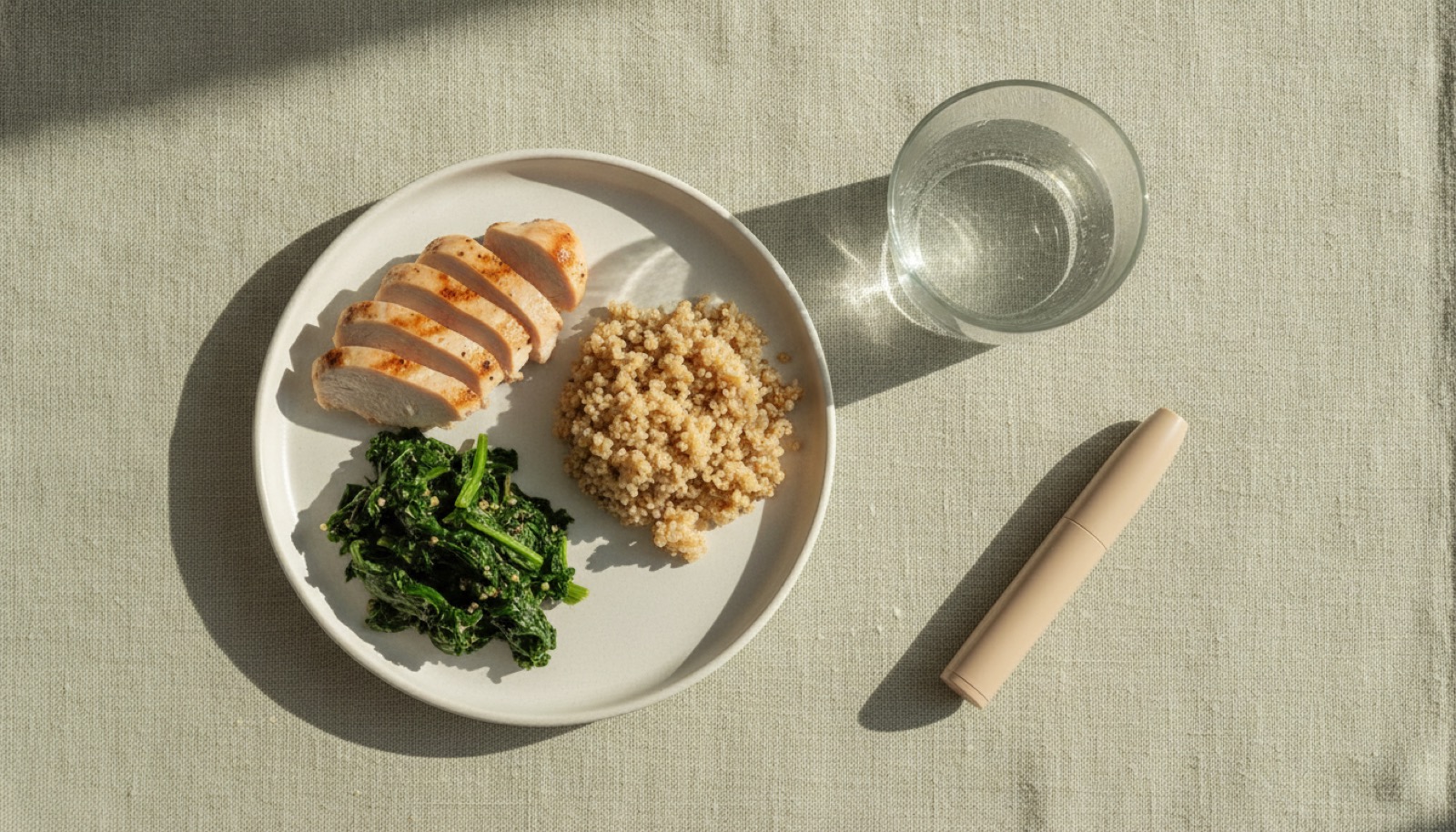
- A simple plate to picture. Forget macros for a moment and picture a small plate. Half of it is protein: eggs, Greek yogurt, chicken, fish, tofu, cottage cheese, or a scoop of protein powder stirred into something. A quarter is produce, cooked vegetables or fruit, which is gentler on a slow-emptying stomach than a big raw salad. The last quarter is a starch or whole grain for energy, kept modest. Fat is fine in small amounts but is the slowest thing to leave the stomach, so a very greasy plate is the one most likely to sit and turn into nausea. Build that plate small, eat the protein corner first, and stop at comfortably satisfied rather than full.
- Easy protein for the days you are not hungry. Some days, especially in the first 48 hours after your shot, the thought of a full plate is unappealing. That is exactly when liquid and soft protein earn their keep, because they go down when solid food will not. A protein shake, Greek yogurt, cottage cheese, eggs, a smoothie with added protein, or a clear bone broth all deliver protein without the volume that triggers fullness. Keep two or three of these on hand so that on a low-appetite day you are not choosing between a heavy meal and nothing. Something small and protein-forward beats skipping the meal entirely.
- Fiber and fluids, because the gut slows down. The same slowed digestion that helps the medication work also makes constipation one of the most common complaints on a GLP-1. Two food habits soften that: gentle, gel-forming fiber from foods like oats, chia, ground flax, beans, and cooked vegetables, and genuinely steady fluid through the day. Fiber only works if there is enough water moving with it, so the two go together. If food alone is not keeping you regular, our fiber guide walks through which supplements tend to be gentlest on a GLP-1 gut, and our electrolytes guide covers the hydration side, which also helps with the early fatigue.
Frequently asked questions
What should you eat on Ozempic?
Lead with protein at every meal, keep portions small because a slow-emptying stomach fills quickly, and drink water steadily through the day. A simple plate is about half protein (eggs, Greek yogurt, chicken, fish, tofu, cottage cheese), a quarter cooked produce, and a modest quarter of whole grains or starch, with fat kept light since it is the slowest food to leave the stomach. There is no official Ozempic diet; this pattern just fits what semaglutide actually changes about your appetite and digestion.
How much protein should I aim for on a GLP-1?
A target many clinicians use is roughly 1.2 to 1.6 grams of protein per kilogram of body weight per day. The reason it matters is that some of the weight lost on semaglutide (Ozempic, Wegovy) and tirzepatide (Mounjaro, Zepbound) is lean muscle rather than fat, as seen in the STEP-1 and SURMOUNT-1 trials. On a small appetite the trick is to eat the protein on your plate first, so the bites that count most are the ones you actually finish.
What can I eat on the days I have no appetite?
Lean on liquid and soft protein, which go down when solid food will not: a protein shake, a smoothie with added protein, Greek yogurt, cottage cheese, eggs, or a clear broth. Keep two or three of these on hand, especially for the first day or two after your shot, so a low-appetite day does not become a no-protein day. Something small and protein-forward beats skipping the meal entirely.
What foods make Ozempic side effects worse?
Large portions, fatty and fried foods, sugary drinks and sweets, alcohol, and for some people carbonated or very spicy foods. Most cause trouble for the same reason: they sit in a stomach that empties slowly on a GLP-1, which turns into nausea, reflux, and an over-full feeling. Sugary drinks also add easy calories that slip past the appetite suppression. Our foods to avoid on Ozempic guide covers each one.
Do I need to count calories on Ozempic?
Most people do not, because the medication lowers appetite for them. The more useful focus is making the food you do eat count, especially protein, and staying hydrated, rather than tracking a calorie number. If you find you are eating so little that fatigue sets in, that is a sign to make your smaller meals more protein-dense, not to push large portions a slow stomach will not tolerate. Discuss any specific calorie or eating plan with your own clinician or a dietitian.
How do I eat enough fiber and water without feeling bloated?
Choose gentle, gel-forming fiber from foods like oats, chia, ground flax, beans, and cooked vegetables, and pair it with steady fluid through the day, since fiber only works with enough water moving alongside it. Go easy on raw, bulky salads and very gassy foods early on, when the gut is already sluggish. If food alone does not keep you regular, our fiber guide covers which supplements tend to be gentlest on a GLP-1 gut.
Sources
Related reading
GLP-1 Nutrition Guide: Protein & What to Eat
Protein targets, muscle preservation, electrolytes, micronutrients, and sample days of eating. The practical food companion for life on a GLP-1.
Best Protein Powders for GLP-1 Users
The protein powders that fit a 30g-per-scoop target, sit well on a slow-emptying stomach, and don't rely on artificial sweeteners readers don't want.
How Much Protein Do You Actually Need on a GLP-1?
The target range (1.2-1.6g per kg body weight), why it matters for muscle preservation, how to hit it on a shrunken appetite, with worked examples.